
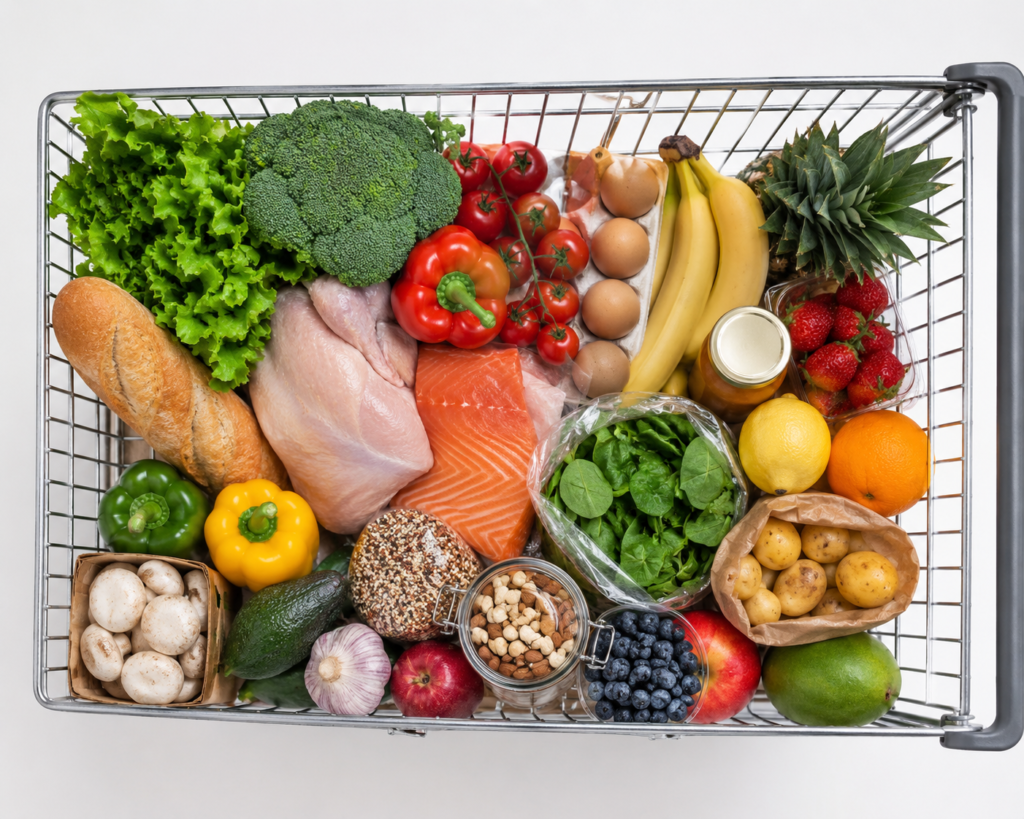
For decades, grocery retailers have pursued personalization. Loyalty programs, digital coupons, recommendation engines, and targeted promotions promised to deliver the right product to the right shopper at the right time. Yet despite billions invested, most grocery experiences remain largely transactional, requiring shoppers to manually search, browse, compare, and build their own carts.
The next evolution of grocery is not better recommendations. It is better outcomes.
Enter the Perfect Cart.
A Perfect Cart is a dynamically generated grocery basket optimized for a shopper’s unique household, preferences, health goals, budget, dietary needs, and real-time shopping context. Rather than helping shoppers find products, AI helps shoppers achieve outcomes.
Powered by Shopper Intelligence, Food Intelligence, and Agentic AI, the Perfect Cart represents a fundamental shift from traditional personalization toward true grocery optimization.
In this article, we’ll explore what the Perfect Cart is, why it matters, and how it will transform the future of grocery commerce.
Grocery Shopping Is Still Too Hard
Despite tremendous advances in technology, grocery shopping remains surprisingly difficult.
Every shopping trip requires consumers to make dozens—sometimes hundreds—of decisions.
They must balance:
- Budget constraints
- Nutrition goals
- Family preferences
- Dietary restrictions
- Allergies
- Promotions and savings opportunities
- Pantry inventory
- Meal planning requirements
- Time constraints
A parent shopping for a family of four faces very different challenges than a college student, a fitness enthusiast, a diabetic shopper, or someone taking GLP-1 medications.
Yet most grocery experiences still treat everyone largely the same.
Today’s grocery websites and apps are essentially digital versions of physical stores. They display products, promotions, and categories, then ask shoppers to do the hard work of figuring everything out.
The result is friction.
Consumers don’t actually want to shop.
They want a solution.
They want confidence that the products they buy align with their goals, their budget, and their household’s needs.
What they really want is the Perfect Cart.
What Is a Perfect Cart?
A Perfect Cart is a dynamically generated grocery basket optimized for a shopper’s unique household and shopping mission.
Unlike a recommendation engine that suggests individual products, a Perfect Cart optimizes the entire basket.
It considers:
- Household composition
- Food preferences
- Dietary restrictions
- Health goals
- Budget constraints
- Shopping habits
- Meal plans
- Pantry inventory
- Current promotions
- Product availability
The result is a complete grocery cart designed specifically for that shopper at that moment in time.
Importantly, there is no universal Perfect Cart.
Every shopper’s Perfect Cart is different.
A fitness enthusiast focused on protein intake requires a different basket than a shopper recently diagnosed with Type 2 diabetes.
A family managing peanut allergies requires different products than a household following a gluten-free lifestyle.
A consumer using GLP-1 medications may prioritize protein density, portion sizes, and nutrient-rich foods differently than a budget-conscious family trying to maximize value.
The Perfect Cart adapts to all of these scenarios.
Because the Perfect Cart isn’t a list of products.
It’s an optimized outcome.
Why Traditional Personalization Never Delivered
Personalization has been a retail buzzword for more than twenty-five years.
Retailers have invested heavily in:
- Loyalty programs
- CRM systems
- Recommendation engines
- Segmentation platforms
- Marketing automation
- Customer data platforms
Yet most personalization initiatives delivered incremental improvements rather than transformational experiences.
Why?
Because most personalization systems only understand transactions.
They know:
- What shoppers purchased
- When they purchased
- How often they purchased
But they rarely understand why.
Knowing that someone bought Greek yogurt six times last month does not reveal whether they are:
- Training for a marathon
- Following a high-protein diet
- Managing diabetes
- Trying to lose weight
- Feeding teenage athletes
Purchase history provides clues.
It does not provide understanding.
This is why traditional personalization often feels generic.
It predicts behavior.
It does not understand intent.
The Perfect Cart requires something deeper.
It requires Shopper Intelligence.
Shopper Intelligence: Understanding the Human Behind the Transaction
Shopper Intelligence moves beyond purchase history and loyalty card data.
It seeks to understand the shopper as a person rather than simply a consumer.
This includes understanding:
- Lifestyle
- Goals
- Preferences
- Constraints
- Motivations
- Household dynamics
Consider the diversity of grocery shoppers today:
The Health Enthusiast
Actively seeks healthier alternatives, nutrition optimization, and ingredient transparency.
The Biohacker
Evaluates products based on macronutrients, ingredients, processing levels, and performance outcomes.
The GLP-1 User
Focuses on protein intake, nutrient density, smaller portions, and digestive comfort.
The Newly Diagnosed Diabetic
Prioritizes blood sugar management and lower-glycemic food choices.
The Gluten-Free Shopper
Must eliminate entire product categories while maintaining variety and nutrition.
The Peanut-Allergic Household
Requires strict allergen awareness and safe substitutions.
The Budget-Conscious Family
Prioritizes value, promotions, and household affordability.
Each shopper requires a fundamentally different grocery experience.
Shopper Intelligence creates a dynamic understanding of these personas and continuously adapts as goals, behaviors, and circumstances evolve.
This intelligence becomes one of the foundational building blocks of the Perfect Cart.
Food Intelligence: The Missing Layer in Grocery AI
Understanding shoppers is only half of the equation.
AI must also understand food.
Unfortunately, traditional grocery catalogs contain very little meaningful intelligence.
Most product catalogs include:
- Product name
- Brand
- Category
- Package size
- Price
- UPC
While useful for inventory management, these attributes are insufficient for AI-driven grocery experiences.
To build a Perfect Cart, AI must understand food at a much deeper level.
This is where Food Intelligence becomes essential.
Food Intelligence enriches grocery products with dozens of additional attributes, often expanding product knowledge from a handful of fields to more than fifty meaningful characteristics.
These attributes may include:
- Nutrition
- Ingredients
- Allergens
- Protein content
- Sugar levels
- Sodium levels
- Fiber content
- Dietary compatibility
- Cuisine associations
- Flavor profiles
- Meal occasions
- Health suitability
- Processing levels
- Functional benefits
- Sustainability attributes
Suddenly, food becomes understandable.
AI can reason about products in the same way a nutritionist, chef, health coach, or grocery expert might.
Food Intelligence enables the system to answer questions such as:
- Which products align with a diabetic-friendly diet?
- What alternatives are suitable for gluten-free shoppers?
- Which products support high-protein goals?
- What ingredients work together in meal plans?
- Which substitutions maintain flavor while reducing sodium?
Without Food Intelligence, the Perfect Cart cannot exist.
The Six Characteristics of a Perfect Cart
The Perfect Cart is defined by six core capabilities.
1. Dynamic Cart Generation
Traditional shopping requires consumers to build carts manually.
The Perfect Cart reverses the process.
AI generates the cart automatically based on shopper goals, preferences, and context.
Instead of starting with products, shoppers start with outcomes.
2. Context-Aware Recommendations
Recommendations become more meaningful when AI understands context.
A recommendation suitable for a college student may be inappropriate for a diabetic shopper.
The Perfect Cart incorporates:
- Household composition
- Health goals
- Dietary restrictions
- Shopping missions
- Current intent
Every recommendation becomes situationally relevant.
3. Budget Optimization
Most households operate within financial constraints.
The Perfect Cart continuously balances:
- Cost
- Promotions
- Value
- Substitutions
- Basket economics
The result is a cart optimized not only for preferences but also affordability.
4. Health Optimization
Health is becoming one of the most important dimensions of grocery shopping.
Consumers increasingly seek guidance around:
- Weight management
- Diabetes management
- Heart health
- Protein intake
- Food sensitivities
- Wellness goals
The Perfect Cart can incorporate these objectives directly into cart generation.
5. Real-Time Adaptation
Shopping conditions constantly change.
Products go out of stock.
Promotions expire.
Prices fluctuate.
Preferences evolve.
The Perfect Cart continuously adapts to changing conditions and recalculates the optimal basket in real time.
6. Household Optimization
Perhaps the most complex challenge in grocery is serving multiple people simultaneously.
A single household may contain:
- Adults
- Children
- Athletes
- Seniors
- Individuals with allergies
- Individuals following specialized diets
The Perfect Cart balances competing needs across the entire household rather than optimizing for a single individual.
From Product Recommendations to Outcome Optimization
For years, grocery retailers have focused on product recommendations.
“Customers who bought this also bought…”
“Recommended for you…”
“People like you purchased…”
These systems attempt to predict the next product.
The Perfect Cart attempts to solve the entire mission.
This represents a shift from product optimization to outcome optimization.
Instead of helping shoppers discover products, AI helps shoppers achieve goals.
That distinction changes everything.
How AI Creates the Perfect Cart
The Perfect Cart emerges from the combination of three critical capabilities.
Shopper Intelligence
Understanding people.
Food Intelligence
Understanding products.
Agentic AI
Reasoning across thousands of variables to optimize decisions.
Together, these systems evaluate:
- Shopper goals
- Household needs
- Product attributes
- Promotions
- Inventory
- Pricing
- Nutritional considerations
The result is a grocery cart uniquely optimized for that shopper and that moment.
Not a recommendation.
Not a promotion.
A complete solution.
The Future of Grocery
The future of grocery shopping is not more search.
It is not more filtering.
It is not more recommendations.
The future of grocery is helping shoppers achieve outcomes.
Consumers increasingly expect experiences that are intelligent, adaptive, and personalized to their needs.
As AI continues to evolve, shoppers will spend less time building carts and more time approving them.
Retailers that embrace this shift will create stronger loyalty, larger baskets, deeper shopper engagement, and more meaningful customer relationships.
The winners of the next decade will not simply sell products.
They will help shoppers make better decisions.
And that future begins with the Perfect Cart.
Because every household deserves a grocery experience designed specifically for them.
Every household deserves its Perfect Cart.
Frequently Asked Questions About the Perfect Cart
What is a Perfect Cart in grocery retail?
A Perfect Cart is an AI-generated grocery basket optimized for a shopper’s unique household, preferences, health goals, budget, dietary requirements, and shopping mission. Rather than recommending individual products, it optimizes the entire basket to achieve a desired outcome.
How is a Perfect Cart different from traditional product recommendations?
Traditional recommendation engines suggest individual products based primarily on purchase history. A Perfect Cart optimizes the complete grocery basket by considering shopper intent, household needs, nutrition goals, promotions, inventory, budget, and real-time context.
Why aren’t loyalty card programs enough for personalization?
Loyalty programs primarily capture transaction history. They reveal what shoppers purchased but rarely explain why they purchased it. A Perfect Cart requires a deeper understanding of shopper goals, preferences, health needs, and household dynamics.
What is Shopper Intelligence?
Shopper Intelligence is the ability to understand the individual behind the transaction. It includes preferences, lifestyle, health goals, dietary restrictions, budget sensitivity, household composition, and shopping intent, enabling more meaningful personalization.
What is Food Intelligence?
Food Intelligence enriches grocery catalogs with detailed product attributes such as nutrition, allergens, ingredients, flavor profiles, dietary compatibility, meal occasions, health suitability, and sustainability characteristics. It allows AI to understand food beyond basic product information.
Why is Food Intelligence important for grocery AI?
Without Food Intelligence, AI cannot accurately recommend products, build meal plans, optimize nutrition, or generate personalized grocery baskets. Food Intelligence provides the knowledge layer required for meaningful grocery decision-making.
How does AI create a Perfect Cart?
AI combines Shopper Intelligence, Food Intelligence, and Agentic AI to evaluate thousands of variables simultaneously, including preferences, health goals, promotions, inventory, pricing, and household needs, to generate an optimized basket.
Can a Perfect Cart help shoppers save money?
Yes. A Perfect Cart continuously evaluates pricing, promotions, private-label alternatives, substitutions, and basket economics to help shoppers maximize value while staying within budget.
Can a Perfect Cart support health and wellness goals?
Yes. A Perfect Cart can be optimized around objectives such as weight management, heart health, diabetes management, high-protein diets, food allergies, gluten-free lifestyles, and other nutrition-focused goals.
How does a Perfect Cart adapt when products are out of stock?
The system continuously monitors product availability and automatically recommends appropriate alternatives that preserve the shopper’s preferences, budget, dietary requirements, and intended meal plans.
Can a Perfect Cart support households with multiple dietary needs?
Yes. One of the key advantages of a Perfect Cart is household optimization. It can balance competing needs across family members, including allergies, health conditions, age groups, dietary preferences, and budget constraints.
What role does Agentic AI play in grocery shopping?
Agentic AI acts on behalf of the shopper. Instead of simply answering questions or making recommendations, it actively builds, optimizes, and refines grocery baskets to achieve specific outcomes.
Will AI eventually shop for consumers automatically?
Many industry experts believe grocery shopping will evolve from manual cart building to AI-assisted or AI-generated carts. Shoppers will increasingly review and approve carts rather than create them from scratch.
How can grocery retailers benefit from Perfect Cart technology?
Retailers can increase basket size, improve customer loyalty, drive higher engagement, boost digital conversion rates, support health initiatives, and create more differentiated shopping experiences.
How does a Perfect Cart improve customer loyalty?
When shoppers consistently receive relevant recommendations, healthier choices, budget savings, and faster shopping experiences, they are more likely to return and build long-term loyalty with the retailer.
Can a Perfect Cart increase average order value?
Yes. Because the system understands the entire shopping mission, it can identify complementary products, meal ingredients, household needs, and relevant substitutions that increase basket completeness and overall spend.
What data is required to build a Perfect Cart?
The most effective Perfect Cart solutions combine transaction history, loyalty data, shopper preferences, household information, food intelligence, inventory data, pricing, promotions, and real-time behavioral signals.
How does a Perfect Cart support retail media and advertising?
A Perfect Cart creates highly contextual moments for product discovery. Brands can reach shoppers with relevant product placements based on household needs, shopping intent, and meal planning scenarios rather than generic audience segments. Learn more about retail media and the opportunities it presents.
What is the difference between hyper-personalization and a Perfect Cart?
Hyper-personalization focuses on tailoring content, offers, and recommendations. A Perfect Cart goes further by optimizing the entire grocery basket and shopping outcome for the individual shopper.
Is the Perfect Cart the future of grocery commerce?
Many industry leaders believe grocery is moving from search-driven shopping to outcome-driven shopping. The Perfect Cart represents a future where AI helps consumers achieve goals rather than simply helping them find products.
Additional Questions Grocery Executives Are Asking
How can grocery retailers use AI to improve personalization?
AI enables retailers to move beyond segmentation and loyalty programs toward individualized shopping experiences that adapt in real time based on shopper intent, household needs, and contextual factors.
What is the future of grocery personalization?
The future of grocery personalization is outcome optimization. AI will increasingly generate, optimize, and manage shopping baskets on behalf of consumers rather than simply recommending products.
How does Agentic AI work in grocery retail?
Agentic AI uses specialized models and decision engines to perform shopping tasks autonomously, including basket building, meal planning, substitutions, budget optimization, and personalized product selection.
What is the difference between Shopper Intelligence and a Customer Data Platform (CDP)?
A CDP stores customer data. Shopper Intelligence transforms that data into a dynamic understanding of goals, preferences, motivations, household needs, and shopping intent that can be used by AI systems.
Why is Food Intelligence becoming critical infrastructure for grocery AI?
Food Intelligence provides the product understanding AI needs to reason about nutrition, allergens, ingredients, flavor profiles, health outcomes, meal planning, and dietary compatibility at scale.
How can grocery retailers compete with Amazon and Instacart using AI?
Retailers can leverage their first-party data, loyalty relationships, local fulfillment capabilities, and AI-powered personalization to deliver more relevant shopping experiences while maintaining ownership of customer relationships and retail media revenue.
What technologies are required to build a Perfect Cart?
Perfect Cart solutions typically require Shopper Intelligence, Food Intelligence, graph-based data models, AI recommendation systems, agentic orchestration, inventory integration, pricing systems, and real-time personalization engines.
How can AI improve grocery basket optimization?
AI can evaluate thousands of variables simultaneously to optimize baskets for nutrition, affordability, household preferences, product availability, promotions, and shopping goals.
What does next-generation grocery personalization look like?
Next-generation personalization moves beyond recommendations and offers toward intelligent shopping assistants that understand shoppers, make decisions on their behalf, and continuously optimize outcomes.
How can grocery retailers increase loyalty with AI-powered shopping experiences?
Retailers can increase loyalty by reducing shopping effort, improving relevance, helping shoppers achieve health and budget goals, and creating highly personalized experiences that improve over time.